The 2025 IPPS (International Plant Production Society) European conference, ‘Innovation meets Efficiency’, was billed to be jam-packed event exploring cutting edge solutions and the future of innovation in a forward-looking gathering, and it delivered.
The 3-day whistlestop tour of some of the most interesting horticultural businesses in the East of England began at Barcham Trees where delegates viewed their impressive robotic potting machine and water capture solutions, this was followed by a very thought-provoking visit to Rymer Trees who grow peat-free, cell-grown native trees and specialise in climate resilient species. Another scale of production was seen at Elveden estates where a demonstration of their instant hedge harvest was given, an additional example of how the right choice of machinery can assist in the efficiency of process. Chapel Cottage showcased their new polytunnel structure and potting machines and the day was rounded off by an US exchange presentation by Edward Coates who gave an interesting insight into the Proven Winners set up and history.
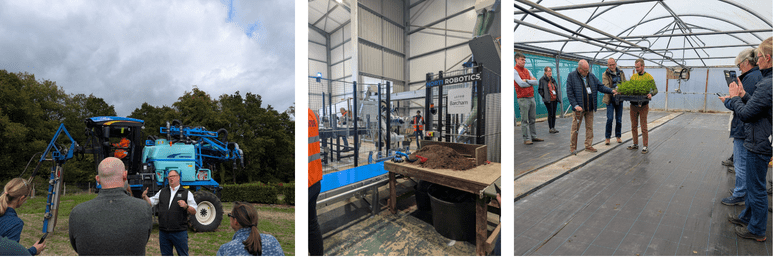
Day 2 started with a fascinating visit to Volmary to see their young plant production, here there were demonstrations of the use of robotics and technology to select and stick cuttings in their propagation unit this was an excellent example of the capability of technology, from there the group travelled to Ball Colegrave where we explored their 9cm shrub production. There was an insightful discussion at Country Herbs & Plants around appropriate use of machinery and mechanisation in the appropriate place. Bridge Farm Horticulture was an impressive purpose built set up that maximised efficiency and slim-lined production to fine margins, a model that was almost totally mechanised and use of technology was maximised to reduce labour.
The third and final day wrapped up the conference with technical talks, industry updates and new introductions from suppliers. The whole event gave an opportunity to have an overview of all scales of production which each offered a different perspective; from high mechanisation and large volume to more nuanced and specialist production. Use of technology, mechanisation and efficiency solutions were different for all, and the key learning was that businesses should really consider what elements would make the most impact to their model; though mechanisation may not always be the most practical choice, it can absolutely be an answer to the increasing costs and environmental factors that many face, however the retention of skills is also important.
Jenna Gove, 2024 Fellow
 LSA CT Fellowship Scheme